Published on Sept. 1, 2026
Infrared thermography: a new tool for more efficient pig production
Feed efficiency is one of the biggest drivers of profitability in pig production. The more efficiently a pig converts feed into growth, the lower the cost of producing pork. Researchers in Canada have been exploring a technology that helps identify naturally efficient animals, creating new opportunities for genetic programs at Hendrix Genetics Swine.
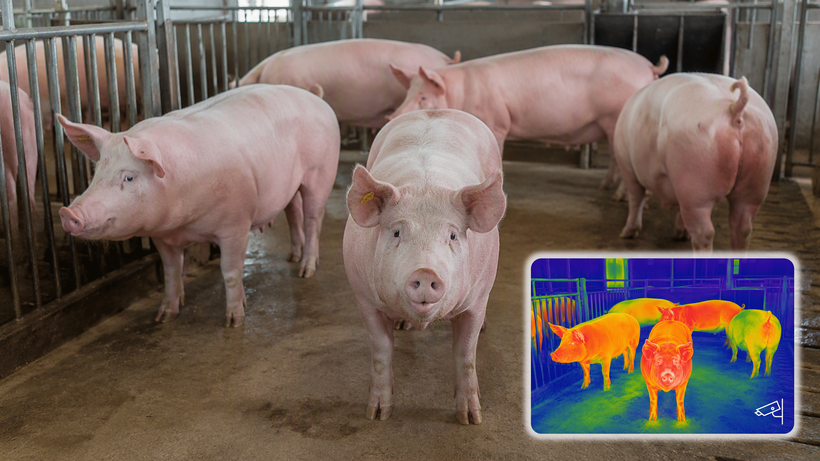
The technology, known as Infrared Thermography (IRT), uses thermal imaging cameras to measure heat emitted from an animal's body. While the technology may seem modern, its origins date back to the 1800s, when Sir William Herschel discovered infrared radiation. Today, thermal imaging is widely used in healthcare, engineering, and increasingly in livestock production.
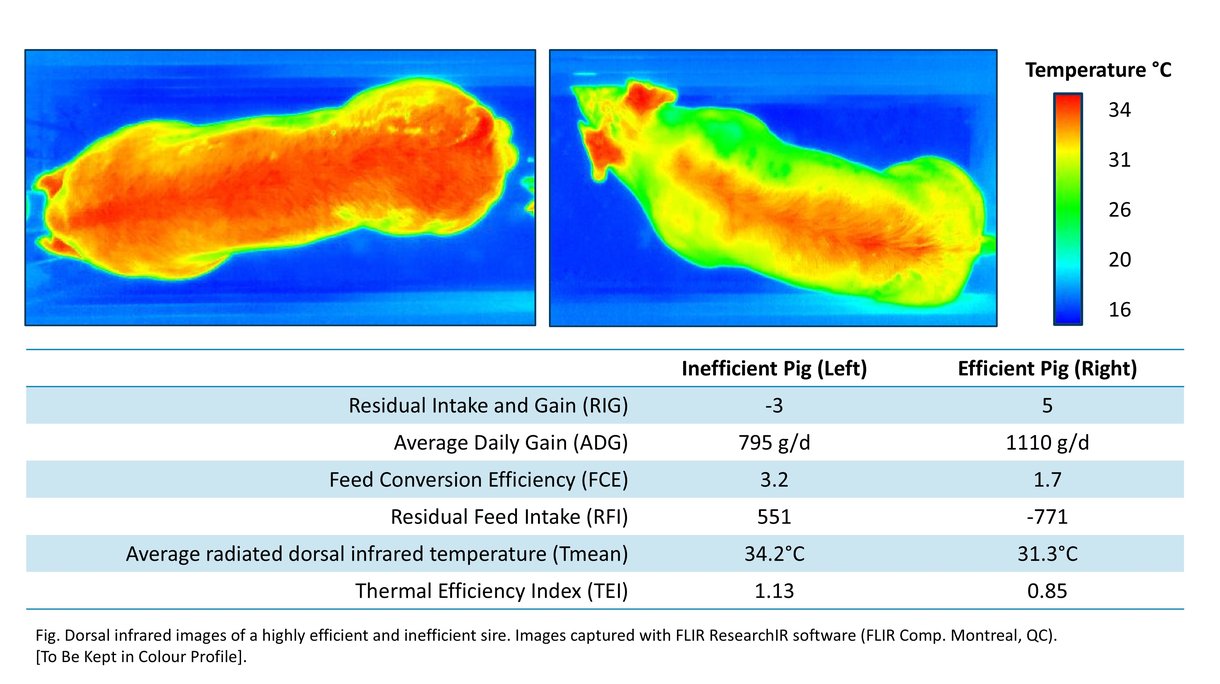
Within swine breeding, infrared thermography helps identify pigs that use energy more efficiently. Hendrix Genetics Swine researchers found that some pigs naturally lose less energy as heat and direct more of it toward growth. This insight led to the development of the Thermal Efficiency Index (TEI).
The concept is simple. When pigs consume feed, part of the energy supports growth and part is lost as heat. Pigs that lose less energy as heat are generally more efficient because they convert more feed into meat production. By measuring surface temperature with infrared cameras, breeders can estimate how efficiently a pig uses energy.
TEI was developed through a collaboration between Hendrix Genetics Swine, PhenoGeneSys Metrics, the University of Alberta, and other Canadian partners. After several years of testing and validation in Canadian nucleus herds, the technology has demonstrated its value under commercial breeding conditions and is now being introduced in Europe.
How Thermal Efficiency Index Works in the Breeding Program
TEI is a genetic selection tool rather than a management tool. Thermal images collected from pigs in nucleus herds are analyzed alongside performance data to generate a TEI score. Animals that waste less energy as heat receive more favorable scores. These results are then combined with other important traits, including growth rate, feed efficiency, robustness, reproduction, and carcass quality.
Animals with the highest overall genetic merit are selected as parents for the next generation. Because Thermal Efficiency Index is moderately heritable, continued selection can gradually improve energy efficiency across the population.
Canadian results show that pigs with favorable TEI scores typically deliver improved feed efficiency, faster growth, better energy utilization, lower feed wastage, and improved thermal regulation.
For producers, the benefit is clear. Feed is the largest cost in pork production, and selecting pigs that direct more energy toward growth can improve performance and profitability over time. Additionally, infrared thermography is completely non-invasive, making it a welfare-friendly technology that can be implemented efficiently on a large scale.
As the industry continues to focus on efficiency, sustainability, and animal welfare, Thermal Efficiency Index provides a new tool for genetic improvement. Having proven its value in Canada, it is now helping European breeding programs identify pigs that make better use of feed and contribute to a more sustainable future for pork production.

By measuring heat loss non-invasively, TEI helps us identify pigs that use feed more efficiently, driving better growth and improved profitability.