Published on June 24, 2026
Ashleigh Farms Demonstrates the Value of Predictable Performance with Danish Hybrid, a Hendrix Genetics Swine F1*
In Waterford, Ireland, Ashleigh Farms has built its production model around discipline, consistency and continuous improvement. Led by Jason McGrath and his brother Ken, the farm combines strong daily routines, strict biosecurity, internal feed production and a clear focus on measurable performance.
A Farm Designed for Consistency
With 1 800 sows across three sites and a team of 25 full-time employees, Ashleigh Farms operates as an integrated and highly structured business. The farm produces its own breeding animals on a dedicated site, manufactures and delivers its own feed, and runs an R&D unit focused on efficiency, sustainability and environmental solutions.
This level of integration gives the team greater control over the main factors influencing performance. It helps reduce variability, support more accurate decision making and create a more predictable working environment for both animals and people.

Predictability is very important for our staff as they can understand how the animal is going to perform.
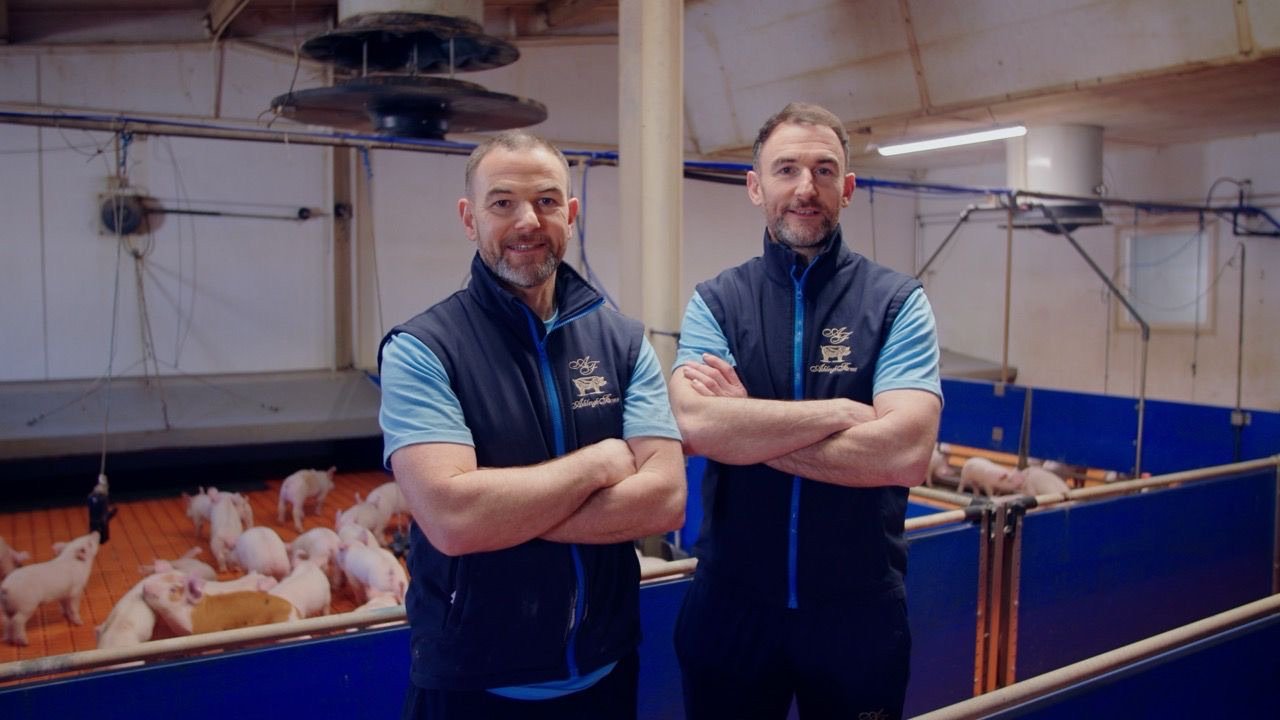
For Ashleigh Farms, predictability is not only a performance objective. It is part of the way the farm is managed every day. Movement between areas requires changing or washing boots, compartments are washed after pigs move out and each environment is prepared before new pigs enter. These routines are applied consistently to protect animal health and support stable results.
Why Chosing Danish Genetics?
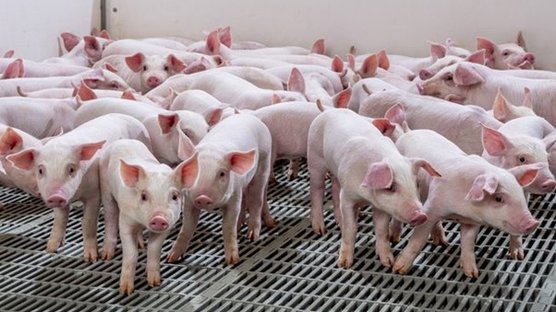
When Ashleigh Farms selected Danish Genetics within Hendrix Genetics Swine, the objective was clear. The farm was looking for uniform, robust piglets at birth, combined with improvements in feed efficiency and growth rate from birth to slaughter. The performance profile now observed on farm reflects these priorities:
| Birth weight of pigs | 1.3 kg |
|---|---|
| Weight at weaning | 7.5 kg |
| Average age at weaning | 27 days |
| Weight post-weaning | 38 kg |
| Days between weaning and start as finisher | 53 days |
| Daily weight gain between 7 kg and 30 kg | 580 g per day |
| Live weight at slaughter | 127 kg |
| Percentage of live weight considered carcass weight | 77% |
| Carcass weight | 97.79 kg |
These results illustrate the type of performance Ashleigh Farms was aiming for when choosing Danish Genetics. For the team, the value of genetics lies not only in individual indicators, but in the overall consistency of the production flow.
Danish Hybrid Supporting Easier Daily Management
Since implementing Danish Genetics, Ashleigh Farms has observed clear and measurable progress in key production areas.
Average Daily Gain has reached 1 250 g per day. Feed conversion has been reducing year after year, with the farm currently running at 2.2. Growth rates have improved, and hernias have been reduced to under 2 percent. While the number of piglets born alive remains steady, the quality and robustness of piglets at birth has improved significantly.
These improvements are visible in the data, but they are also felt in the daily work of the farm team.
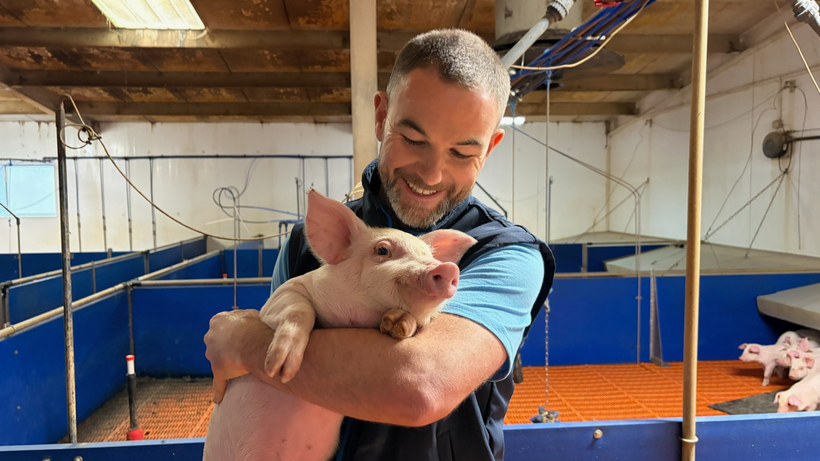
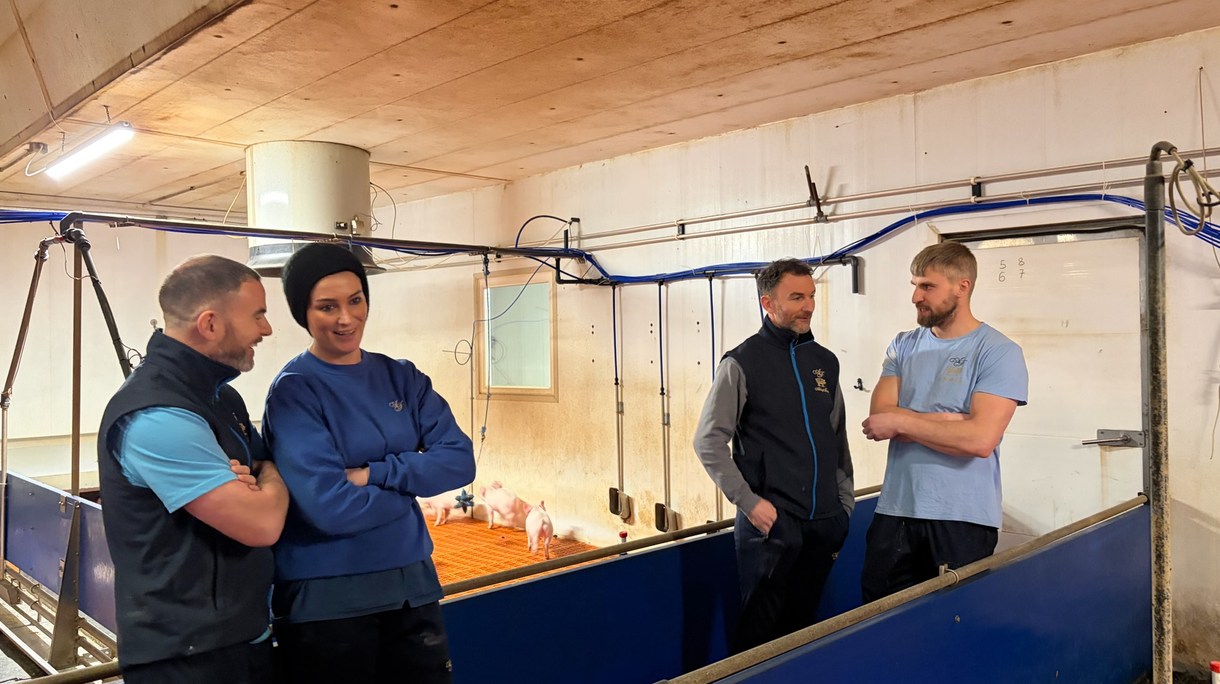
“We are now able to manage the piglets much easier,” explains Jason McGrath. “The sows can rear their own piglets and the staff have to spend less time fostering and can spend more time taking care of the things.”
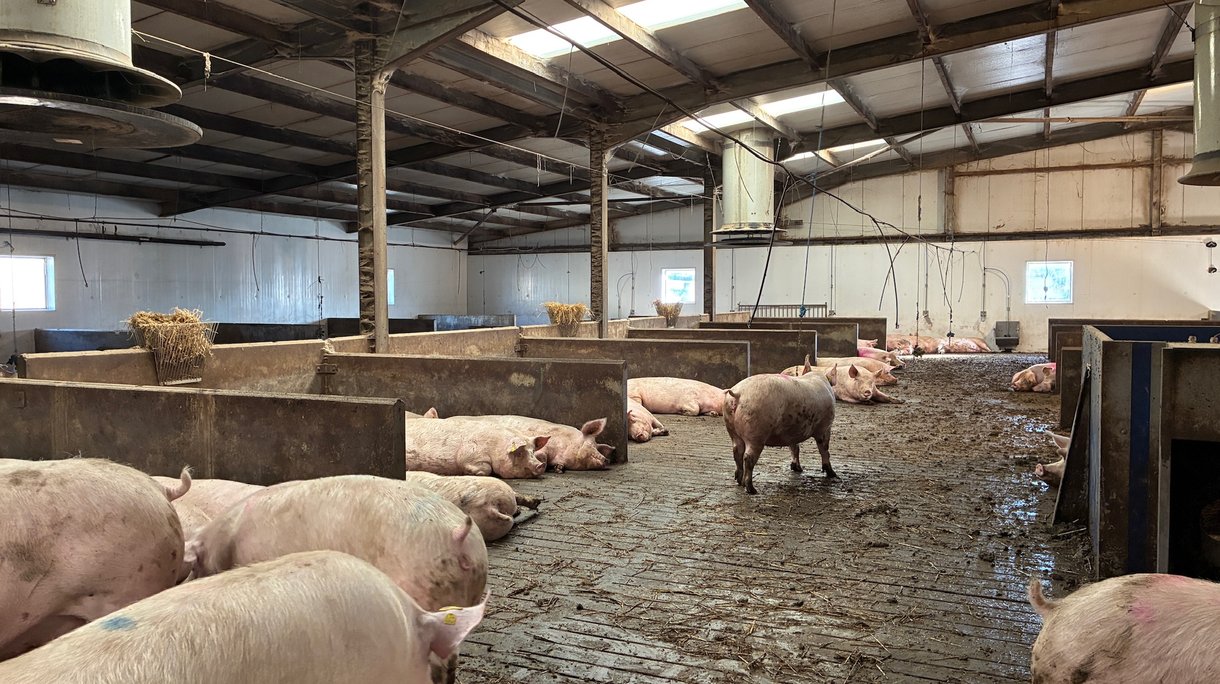
This is a key point in the Ashleigh Farms experience. Stronger and more uniform piglets contribute to easier management, fewer interventions and better use of staff time. In practice, this means the team can focus less on corrective actions and more on maintaining the conditions that support performance.
The Human Impact of Consistent Results
One of the most important outcomes for Ashleigh Farms has been the effect of predictability on the people working with the animals every day.
When results are more stable, the team can see a clearer connection between the work done at the beginning of the production cycle and the results achieved at the end. This has a direct influence on confidence, motivation and morale.
“The fact our performance continues to improve, the morale of our staff is much better,” says Jason McGrath. “They can now see that putting in the work at the start gives great results at the end.”
For Ashleigh Farms, genetics, management and people are closely connected. The choice of genetics supports the production system, but the results are achieved through the consistency of daily routines and the commitment of the team.
A Practical Example of Predictable Performance
Ashleigh Farms provides a concrete example of how robust piglets, disciplined management and predictable genetics can work together to deliver measurable improvements.
The experience shows how Danish Hybrid, the Hendrix Genetics Swine F1, can support stronger piglet quality, improved growth, better feed efficiency and easier daily management. It also highlights an important point for modern pig production: performance is not only about numbers. It is also about creating a system where people can work with more confidence and where decisions are supported by consistency.
For Jason McGrath, choosing the right genetics is a strategic decision. In a volatile market, predictability, efficiency and robustness are essential to support profitability and sustainability over time.
*F1 refers to the first-generation hybrid resulting from crossing two purebred lines.